AI Training with Python: Machine Learning, Deep Learning & Generative AI (LLMs) Training

AI Training in Nepal with Python: Machine Learning, Deep Learning & Generative AI
AI INTEGRATED COURSE

AI Training with Python: Machine Learning, Deep Learning & Generative AI (LLMs) Training

AI, ML, Deep Learning & Generative AI Course in Nepal

Mode: Physical & Online Live Classes (Day/Night)
Successful student from Broadway Infosys Mr. Sujan Shrestha
Successful student from Broadway Infosys Mr. Saksham Karki
Successful student from Broadway Infosys Mr. Aayush Karanjit
Successful student from Broadway Infosys Ms. Silviya Dangol

Thousands of students have started their careers after getting certified by Broadway Infosys

Updated On: 22/07/2026

Created On: 17/06/2022

Course Overview

The AI training in Nepal with Python is a comprehensive artificial intelligence program that aims to give professionals, students, and technology enthusiasts practical and theoretical knowledge to enable them to thrive in the fast-paced world of Artificial Intelligence.

The course is hands-on in its approach, using Python, the standard programming language for AI, to impart fundamental and advanced concepts from three important streams: Machine Learning, Deep Learning, and Generative AI via Large Language Models. 

From building traditional ML models to venturing into state-of-the-art Neural Networks and generative AI tools such as ChatGPT, it offers a pathway for forward-looking learners.

Tools Covered

Some of the major industry-relevant tools you'll work with in this course include:

  • Python
  • Jupyter Notebook
  • Google Colab
  • Pandas
  • NumPy
  • Matplotlib
  • Seaborn
  • Plotly
  • TensorFlow
  • Keras

What Our Students Say About Python with AI Training

4.9 (20 reviews)

Mr. Sakshyam Karki

AI training in Nepal with Python: Machine Learning, Deep Learning & Generative AI

I thoroughly enjoyed embarking on this journey of acquiring new knowledge and refining my existing skills. This was an incredible experience in learning about artificial intelligence.

Ms. Khusbu Ayer

AI training in Nepal with Python: Machine Learning, Deep Learning & Generative AI

Our instructor was an excellent and always answered any queries that we had. She’s very helpful, and I appreciate getting to learn from her.

Er. Bimala Sharma

AI training in Nepal with Python: Machine Learning, Deep Learning & Generative AI

Taking the AI with Python course with Broadway Infosys was a game-changer for our team. We learned not just how AI works, but also how to use it effectively with practical tools. The hands-on sessions made complex concepts easy to...

Students who got hired learning with us

Hear from graduates who have completed our courses.

College/Faculty: Kathford International College of Engineering & Management / Bachelor of Electronics, Communication and Information Engineering

Working At: NextWaveAI Pvt. Ltd.

Position: Junior AI / ML Engineer

College/Faculty: Bhaktapur Multiple Campus / BIT

Working At: Dynamic Technosoft Pvt. Ltd

Position: Jr. Dot Net Developer

College/Faculty: IIMS College / Bachelor of Computer Science

Working At: Nexora Dynamics

Position: Backend Associates

College/Faculty: Lord Buddha Education Foundation (LBEF) / Bachelor of Science in Information Technology

Working At: Palm Mind Technology Pvt. Ltd.

Position: AI/ML Intern

Our graduates are hired by 470+ companies in Nepal

Time for you to be the next hire. With our advanced and industry relevant courses, you are on the right stage to start your dream career.
Our graduates are hired by
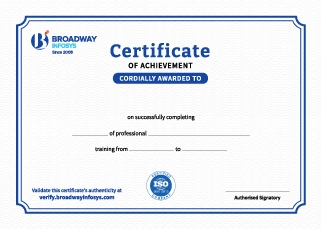
Earn a High Value Industry Certificate

Add this credential to your LinkedIn profile, resume, or CV to stand out to recruiters.
Already earned a certificate? Verify it here

Frequently Asked Questions

No prior professional experience in AI is required. Basic knowledge of Python and programming fundamentals can help, but beginners interested in Python and AI can also join the training.

Yes. The training is suitable for beginners and learners with basic programming or Python knowledge who want to build practical AI skills.

Yes. You will learn fundamental and practical Machine Learning concepts, including data preparation, model development, training, evaluation, and applying machine learning techniques to real-world problems.

You will learn Python for AI, machine learning, deep learning, and Generative AI, along with the concepts, tools, and techniques used to develop AI-powered solutions.

Yes. The training covers Deep Learning concepts and techniques, including neural networks and their applications in AI development.

You will learn the fundamentals and practical applications of Generative AI, including how AI models can be used to generate and work with different types of content and build AI-powered applications.

Yes. You will work on practical projects that help you apply Python, Machine Learning, Deep Learning, and Generative AI concepts to real-world use cases.

Dedicated labs, certified instructors, and placement support. You will receive guidance from trainers throughout the course, including support with practical exercises, coding tasks, projects, and technical concepts. You can also ask questions and get clarification during the training.

Yes. Depending on your requirements, you can discuss suitable schedules with the training team. One-to-one training and group-based learning options may also be available.

Our course is available in hybrid training mode. You can attend classes in person or join online, whichever works best for you. If you cannot attend in person on a particular day, you can simply join the class online instead.

The course pricing varies depending on the subject and level. For detailed information on the course price, please contact us directly: +977-9841002000 / +977-1-4111849. Our team will be happy to guide you or send us an email at [email protected].

Our syllabus outlines are only the headlines of the major modules. To ensure a complete understanding of the course, we offer free counseling. Also, if you have specific modules in mind, you can customize the course. Send your inquiry today!

  • What exactly is Python?
  • Python's root and its ecosystem
  • Python Installation & IDEs setting up (Google Colab, Jupyter Notebook, VSCode, PyCharm)
  • Python framework & Python syntax
  • Hands-on writing code on Google Colab

  • Data Types & Variables (String, Integer, Float, Complex, Boolean, None)
  • Input and Output Functions
  • Working with the format() method, f-strings, & escape sequences
  • Basic Arithmetic & Operators
  • Type casting, type checking, & validation

  • Conditional Statements (if, else, elif)
  • Loops (for, while)
  • Looping over tuples, strings, & dictionaries
  • Special loops in Python (for/else)
  • Using nested loops and flow control through conditions
  • Resolving real-world problems to improve skills
  • Special Statements: pass, continue, break

AI Tool:

  • Google Colab - Gemini

Lists:

  • Overview & fundamental operations
  • Indexing, slicing, & negative indexing
  • Looping through lists & conditions
  • List methods like .insert(), .append(), .remove(), .sort(), etc.
  • List comprehension with conditions

Tuples:

  • Introduction & operations
  • Indexing, slicing, & looping
  • List versus Tuple
  • Switching between lists and tuples
  • Tuple unpacking

Sets:

  • Introduction & set operations
  • Adding, removing, & discarding items
  • Set operations: union, intersection, and difference
  • Frozenset versus set

Dictionaries:

  • Introduction to dictionaries & methods like .get(), .update(), .keys(), .pop(), etc.
  • Dictionary comprehension
  • Nested dictionaries

AI Tool:

  • Gemini or Codeium

  • Defining functions through def keyword
  • Parameters, Arguments, & Return Statements
  • Returning multiple values
  • Default & keyword arguments
  • Anonymous functions (lambda)
  • Nested functions & closures
  • Scopes in Python: Local and Global

Text File Operations:

  • Reading & writing text files
  • Modes of file (r, w, a, rb, wb)
  • File path handling with the os module

Working with CSV Files:

  • Basics of CSV format and operations
  • Reading & writing CSV files with csv.reader & csv.writer
  • Using dictionaries in CSV files

Working with JSON:

  • Introduction to JSON & its structure
  • Reading & writing JSON data with the json module
  • Parsing JSON strings

AI Tool:

  • Using ChatGPT for prompt engineering

  • Classes & Objects
  • Class versus Object attributes
  • Initializing object attributes with __init__()
  • self keyword
  • Inheritance: single, multiple, and multi-level
  • Polymorphism & operator overloading
  • Function overriding & encapsulation

AI Tools:

  • Pythontutor.com

  • Try-except blocks
  • Catching specific exceptions
  • Using else & finally
  • Generating and creating custom exceptions
  • Problem-solving strategies

  • Lambda Functions
  • Generators & Iterators
  • List Comprehensions
  • Working with *args & **kwargs

Standard Libraries: os, random, math, functools, etc.

Data Manipulation with Pandas

  • Working with DataFrames
  • Reading & writing CSV files
  • Data manipulation techniques

Data Visualization

  • Using Matplotlib, Seaborn, and Plotly

AI Tools

  • Pandas Profiling

  • Designing and changing databases and tables
  • CRUD operations (CREATE, SELECT, UPDATE, DELETE)
  • Filtering data with the WHERE clause

AI Tools for SQL

  • DBeaver for SQL queries
  • Optimizing & explaining SQL queries with ChatGPT

  • Installing & configuring Git
  • Setting up local & remote repositories
  • Making commits & branching
  • Integrating local repositories to GitHub
  • Pushing changes & cloning repositories

AI Tools

  • GitHub Copilot for Git commands

  1. Web Scraping + Database + File Operations: Scrape data, store it in SQL, & export to CSV/JSON
  2. Desktop Application (Data Entry System): Develop an application to manage data in JSON/CSV format
  3. CLI Application with CRUD Operations: Design a CLI app with basic CRUD operations & database integration

  • What is Artificial Intelligence: definition and scope
  • Narrow AI vs. General AI: conceptual distinction
  • AI vs. Machine Learning vs. Deep Learning: how the fields relate
  • Brief history and evolution of AI (rule-based systems to modern ML/DL)
  • Types of Machine Learning: supervised, unsupervised, reinforcement (conceptual)
  • Data-driven vs. rule-based systems
  • The standard ML workflow: data -> features -> model -> evaluation -> deployment
  • Real-world AI applications across industries
  • Ethical considerations and limitations of AI systems

  • Definition of supervised learning and the labeled-data requirement
  • Components: features (X), labels/targets (y), hypothesis function, loss function
  • Regression vs. classification as the two core supervised problem types
  • Parametric vs. non-parametric models
  • The training process: minimizing a loss function via optimization
  • Model capacity, overfitting, and underfitting: conceptual explanation
  • Train/validation/test splits and why they matter
  • Common supervised algorithms recap (linear/logistic regression, SVM,trees, kNN)
  • How a model generalizes to unseen data

  • Definition of unsupervised learning and why labels aren't required
  • Core tasks: clustering, dimensionality reduction, density estimation
  • Similarity and distance metrics (Euclidean, cosine, Manhattan)
  • How clustering algorithms find structure without supervision
  • K-Means: centroids, iterative assignment, and convergence
  • Hierarchical clustering: conceptual overview
  • Dimensionality reduction intuition (PCA recap)
  • Association rule mining: conceptual introduction
  • Evaluating unsupervised results without ground truth (silhouette score, inertia)
  • When to use unsupervised vs. supervised approaches

  • Bagging vs. boosting: how ensemble methods improve performance
  • Random Forest recap and key hyperparameters
  • AdaBoost: weighted error and iterative reweighting
  • Gradient Boosting Machines (GBM)
  • XGBoost, LightGBM, and CatBoost overview
  • Stacking and blending models
  • Voting classifiers/regressors (hard vs. soft voting)
  • Choosing an ensemble strategy for a given problem

  • Cross-validation strategies (k-fold, stratified, time series split)
  • Nested cross-validation for unbiased model selection
  • Hyperparameter tuning: Grid Search, Random Search, Bayesian Optimization
  • AutoML: conceptual overview
  • Model interpretability with SHAP and LIME
  • Feature importance and partial dependence plots
  • Individual Conditional Expectation (ICE) plots
  • Avoiding overfitting during tuning

  • Challenges of imbalanced datasets
  • Oversampling (SMOTE) and undersampling techniques
  • Borderline-SMOTE and ADASYN variants
  • Cost-sensitive learning
  • Anomaly detection framing for rare-event problems (Isolation Forest overview)
  • Advanced evaluation: PR-AUC, F-beta score, Matthews correlation coefficient
  • Threshold tuning
  • Business-driven metric selection

  • Trend, seasonality, and stationarity
  • Time series feature engineering (lags, rolling windows)
  • ARIMA and exponential smoothing: conceptual introduction
  • Facebook Prophet for business forecasting
  • Forecasting with ML models (gradient boosting for time series)
  • Walk-forward validation and backtesting
  • Multi-step forecasting: conceptual overview
  • Forecast evaluation (MAE, RMSE, MAPE)

  • Types of recommender systems: content-based, collaborative filtering, hybrid
  • User-based vs. item-based collaborative filtering
  • Matrix factorization (SVD): conceptual introduction
  • Implicit vs. explicit feedback
  • The cold-start problem and mitigation strategies
  • Evaluation metrics: precision@k, recall@k, NDCG
  • Popularity bias and diversity in recommendations
  • Real-world considerations: scalability and freshness

  • Biological inspiration and the artificial neuron (perceptron)
  • Network components: input layer, hidden layers, output layer, weights, biases
  • Activation functions: sigmoid, tanh, ReLU, and why non-linearity is essential
  • Forward propagation: how input becomes prediction, layer by layer
  • Loss functions: measuring prediction error (MSE, cross-entropy)
  • Backpropagation: how error signals flow backward to update weights (conceptual)
  • Gradient descent: how weights are updated to reduce loss
  • The universal approximation theorem: conceptual understanding
  • Epochs, batches, and the training loop
  • Why depth (multiple layers) lets networks learn complex patterns

  • Advanced optimizers: SGD with momentum, RMSProp, Adam
  • Learning rate schedules and warm-up
  • Mixed precision training: conceptual overview
  • Batch normalization
  • Dropout and weight decay
  • Label smoothing
  • Early stopping and checkpointing
  • Diagnosing training issues (vanishing/exploding gradients)

  • Autoencoder architecture and use cases
  • Denoising autoencoders
  • Variational Autoencoders (VAE): conceptual introduction
  • Learned embeddings and representation learning
  • Contrastive learning: conceptual introduction (SimCLR)
  • Self-supervised learning: conceptual overview
  • Anomaly detection with autoencoders

  • Recurrent Neural Networks (RNN): architecture and limitations
  • Long Short-Term Memory (LSTM) and GRU networks
  • Bidirectional RNNs
  • Sequence padding, masking, and batching
  • Teacher forcing during training
  • Applications: time series and text sequence modeling
  • Bridging into Transformer-based approaches

  • Why model compression matters for production
  • Pruning: removing unnecessary weights or neurons (conceptual overview)
  • Quantization: reducing numeric precision for smaller, faster models (conceptual overview)
  • Knowledge distillation: teacher-student framework
  • Exporting models with ONNX: conceptual overview
  • Benchmarking model size, latency, and accuracy trade-offs
  • Hardware considerations: CPU vs. GPU vs. edge devices
  • Choosing a compression strategy for a deployment target

  • Reading, displaying, and manipulating images with OpenCV
  • Color spaces and channels
  • Image filtering, edge detection, and thresholding
  • Contours and basic shape detection
  • Classical feature descriptors: SIFT and ORB (conceptual overview)
  • Histogram of Oriented Gradients (HOG): conceptual overview
  • Image augmentation techniques

  • Review of CNN building blocks (convolution, pooling, feature maps)
  • Popular architectures: VGG, ResNet, Inception, EfficientNet overview
  • Residual connections: how ResNet addressed vanishing gradients
  • Depthwise separable convolutions and lightweight architectures (MobileNet overview)
  • Batch normalization within CNNs
  • Architecture trade-offs: accuracy vs. latency vs. model size
  • Visualizing CNN feature maps and filters

  • Feature extraction vs. fine-tuning
  • Freezing and progressively unfreezing layers
  • Choosing a pretrained backbone (ImageNet-pretrained models)
  • Handling small datasets with transfer learning
  • Data augmentation strategies for fine-tuning (MixUp, CutMix: conceptual overview)
  • Avoiding catastrophic forgetting
  • Evaluating transfer learning effectiveness

  • Object detection formulation: bounding boxes, anchors, IoU
  • Two-stage detectors: Faster R-CNN (conceptual overview)
  • One-stage detectors: the YOLO family (conceptual overview)
  • Non-maximum suppression (NMS)
  • Evaluation: mAP and precision-recall curves for detection
  • Training a custom object detector
  • Real-time detection considerations

  • Semantic vs. instance segmentation
  • U-Net architecture and encoder-decoder design
  • Segmentation evaluation: IoU and Dice coefficient
  • Pose estimation: conceptual overview (keypoint detection)
  • Video understanding: conceptual overview (tracking, action recognition)
  • Choosing the right vision task formulation for a business problem

  • Face detection and recognition: conceptual overview
  • Optical Character Recognition (OCR)
  • Vision Transformers (ViT): conceptual overview as an alternative to CNNs
  • Building a computer vision inference pipeline
  • Model optimization for inference: conceptual overview
  • Deploying a CV model behind an API

  • Tokenization strategies: word, character, and subword tokenization (conceptual overview)
  • Bag-of-Words and TF-IDF representations
  • Word embeddings: Word2Vec (CBOW and Skip-gram): conceptual overview
  • GloVe embeddings: conceptual overview
  • Embedding evaluation: analogy and similarity tasks
  • Handling out-of-vocabulary words
  • Choosing a text representation for a given task

  • Self-attention and multi-head attention
  • Positional encoding
  • Encoder-only vs. decoder-only vs. encoder-decoder architectures
  • Why Transformers replaced RNNs for many NLP tasks
  • Computational considerations of Transformers

  • BERT and encoder-only models
  • GPT and decoder-only models
  • Fine-tuning vs. feature extraction
  • Parameter-efficient fine-tuning: adapters and LoRA (conceptual overview)
  • Fine-tuning a pretrained model for text classification or NER
  • Model selection based on task type

  • Named Entity Recognition (NER): the BIO tagging scheme
  • Part-of-speech (POS) tagging: conceptual overview
  • Relation extraction: conceptual overview
  • Using Transformer-based models for token classification
  • Building a custom entity extraction pipeline
  • Evaluation: precision, recall, F1 at the entity level
  • Applications: document processing, knowledge graph construction

  • Sequence-to-sequence architecture
  • Text summarization approaches
  • Machine translation: conceptual overview
  • Decoding strategies: greedy search, beam search, sampling
  • Evaluation metrics (ROUGE, BLEU): conceptual introduction
  • Handling long documents: chunking strategies

  • Combining preprocessing, model inference, and post-processing
  • Batch vs. real-time NLP inference
  • Cross-lingual and multilingual models: conceptual overview
  • Monitoring NLP model performance over time
  • Handling noisy or informal text (social media, chat)
  • Packaging an NLP pipeline for reuse

  • Generator and discriminator architecture
  • Adversarial training process
  • Common GAN challenges (mode collapse, training instability)
  • Evaluation: Inception Score and FID (conceptual overview)
  • Applications of GANs (image generation, data augmentation)
  • Popular GAN variants: conceptual overview (DCGAN, StyleGAN)

  • Variational Autoencoders (VAE) revisited for generation
  • Diffusion models: conceptual introduction
  • Classifier-free guidance: conceptual overview
  • Comparing GANs, VAEs, and diffusion models
  • Applications in image and audio generation
  • Ethical considerations in generative media

  • Scaling laws: how model size, data, and compute affect performance (conceptual overview)
  • Evolution of GPT-style architectures: conceptual overview
  • Open-weight LLMs: LLaMA, Mistral (conceptual overview)
  • Pretraining, supervised fine-tuning, and alignment: conceptual overview of the pipeline
  • Context length and its practical implications
  • Evaluating LLMs: benchmarks and known limitations

  • Zero-shot, one-shot, and few-shot prompting
  • Chain-of-thought prompting for reasoning tasks
  • Role-based and system prompts
  • Prompt chaining for multi-step tasks
  • Structured output generation (JSON mode): conceptual overview
  • Prompt injection risks and basic mitigation
  • Evaluating and iterating on prompts systematically

  • When to fine-tune vs. prompt an LLM
  • Full fine-tuning: costs and risks
  • Parameter-efficient fine-tuning (LoRA): conceptual introduction
  • Instruction tuning for following natural language instructions
  • Preparing an instruction-tuning dataset
  • Evaluating fine-tuned models for quality
  • Choosing the right adaptation strategy for a use case

  • Embeddings and vector databases (FAISS, ChromaDB)
  • Retrieval-Augmented Generation (RAG) architecture
  • Building RAG pipelines with LangChain
  • AI agents: reasoning, planning, and tool use (conceptual overview)
  • Evaluating RAG output quality
  • Responsible AI: hallucinations, bias, and data privacy

  • Streamlit app architecture and execution model (script rerun behavior)
  • Session state: managing application state across reruns
  • Caching strategies: st.cache_data vs. st.cache_resource
  • Multi-page applications and navigation
  • Custom forms, input validation, and file uploads
  • Theming and layout customization

  • Deploying ML, CV, and NLP models in Streamlit
  • Handling model loading efficiently with caching
  • Streaming LLM responses in real time
  • Building chat interfaces (st.chat_message, st.chat_input)
  • Displaying images, predictions, and visualizations
  • Handling long-running inference with progress feedback

  • FastAPI application structure and routing
  • Path, query, and body parameters
  • Request and response models with Pydantic
  • Async endpoints and when they matter for I/O-bound work
  • Auto-generated documentation with Swagger UI

  • Dependency injection for shared logic (auth, shared resources)
  • Serving ML/DL models through an API
  • Error handling and custom exception responses
  • Testing APIs with pytest and FastAPI's TestClient
  • Logging and basic monitoring for APIs

  • Connecting a Streamlit front-end to a FastAPI backend
  • Designing a clean API contract between front-end and backend
  • Environment and configuration management
  • Logging and monitoring across a full-stack application
  • Deployment options: conceptual overview
  • Building a deployment checklist for AI applications
Upcoming Classes (7)
16 Sep 2026
20 Sep 2026
23 Sep 2026
28 Sep 2026
29 Sep 2026
05 Oct 2026
11 Oct 2026

Why AI training in Nepal with Python: Machine Learning, Deep Learning & Generative AI?

Three Streams, One Program: Master ML, Deep Learning, and Generative AI/LLMs together, a complete progression, not scattered training.
GPU-Enabled Training Labs: Train CNNs and deep learning models on lab machines built for the job.
Cutting-Edge GenAI Skills: Work with LLMs, Hugging Face, LangChain, and RAG pipelines to build real Q&A bots and semantic search apps using the same tools powering today's AI industry.
Live App Deployment Access: Deploy your Streamlit and FastAPI apps to a dedicated Broadway server, leave with a live, shareable project link.
From Model to Deployment: Go beyond training; learn to deploy models as live apps, so your projects are demo-ready, not just notebooks.
Quick Inquiry

Choose class schedule(s)

  • 16 Sep 2026
  • 20 Sep 2026
  • 23 Sep 2026
  • 28 Sep 2026
  • 29 Sep 2026
  • 05 Oct 2026
  • 11 Oct 2026