Dashain 2083 Holiday Notice!

New
Agentic AI Training
Agentic AI Course from Prompting to Enterprise AI Automation




Thousands of students have started their careers after getting certified by Broadway Infosys
Updated On: 10/07/2026
Created On: 09/03/2026
Course Overview
Agentic AI training in Nepal at Broadway Infosys teaches you how businesses use modern LLM tools such as ChatGPT from OpenAI, Gemini from Google, and Claude from Anthropic for real-world work in Telecom and Manufacturing.
Students start with LLM basics and professional prompting methods. Then they learn about AI software connections, which use APIs to create automated workflow systems. The course teaches enterprise knowledge retrieval, spreadsheet automation, system integration using n8n, and privacy and AI monitoring practices.
After completing the Agentic AI course, students will be knowledgeable about AI for task automation, operational improvement, and business decision-making support.
Tools Covered
Some of the major industry-relevant tools you'll work with in this course include:
-
ChatGPT
-
Gemini
-
Claude
-
n8n
-
Slack
-
Google Sheets
-
Airtable
-
CRMs
-
Google Calendar
-
Pinecone
Students who got hired learning with us
Hear from graduates who have completed our courses.
College/Faculty: Bhaktapur Multiple Campus / BBA
Working At: Broadway Infosys
Position: Assistant Accountant
College/Faculty: The British College / Bsc (Hons) Computing
Working At: Discount E-commerce Pvt. Ltd.
Position: Junior Backend Developer
College/Faculty: Samriddhi College / BSc. CSIT
Working At: CloudTech Service
Position: Software Engineer
College/Faculty: Oslo Metropolitan University / MSc Data Science
Working At: Palm Mind Technology Pvt. Ltd.
Position: Machine Learning Python Developer
Our graduates are hired by 470+ companies in Nepal
Time for you to be the next hire. With our advanced and industry relevant courses, you are on the right stage to start your dream career.

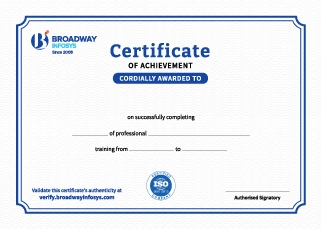
Earn a High Value Industry Certificate
Add this credential to your LinkedIn profile, resume, or CV to stand out to recruiters.
Already earned a certificate?
Verify it here
Frequently Asked Questions
No prior experience is required. A basic understanding of programming, Python, APIs, and AI/ML concepts is helpful, but beginners can also join and learn the concepts step by step.
Yes. The training introduces Agentic AI concepts step by step and is suitable for learners who want to develop practical AI skills.
You will learn about AI agents, LLMs, agent workflows, automation, tool integration, memory, reasoning, and building AI-powered applications.
Yes. You will learn how Python and relevant AI frameworks and tools can be used to develop AI agents and practical agentic AI applications.
Yes. You will learn how Large Language Models (LLMs) power AI agents, including concepts such as prompting, tool calling, workflows, and model integration.
Yes. The training covers integrating AI agents with tools, APIs, and external services so they can perform tasks beyond simple text generation.
You will be able to understand agentic workflows, build basic AI agents, integrate LLMs and tools, automate tasks, and develop practical AI-powered solutions.
The skills can support roles such as AI Developer, Generative AI Developer, AI Engineer, Python Developer, Automation Developer, and other AI-focused roles.
You will receive trainer guidance throughout the course, including support with practical exercises, coding, tools, projects, and technical concepts.
Yes. Depending on your requirements, you can discuss suitable schedules with the training team. One-to-one training and group-based learning options may also be available.
Our course is available in hybrid training mode. You can attend classes in person or join online, whichever works best for you. If you cannot attend in person on a particular day, you can simply join the class online instead.
The course pricing varies depending on the subject and level. For detailed information on the course price, please contact us directly: +977-9841002000 / +977-1-4111849. Our team will be happy to guide you or send us an email at [email protected].
Our syllabus outlines are only the headlines of the major modules. To ensure a complete understanding of the course, we offer free counseling. Also, if you have specific modules in mind, you can customize the course. Send your inquiry today!
Lesson 1: AI Agent Essentials
- Transitioning from "Rule-Based" logic to "Reasoning-Based" autonomous agents
- Why GPUs (NVIDIA) are required for parallel AI processing versus standard CPUs
- Small Language Models (SLMs), Agent-to-Agent (A2A) protocols, and 2026 orchestration techniques
- LLM basics and alternatives, tokens, and context windows
- Automation, workflows, and AI agents
- Running open source LLM models locally
- Intro to Agentic Runtimes like OpenClaw and NemoClaw
- Mastering GET (fetch data), POST (send data), PUT (update), and DELETE
- Generating and securing API Keys; understanding Bearer Tokens and headers
- Reading and structuring the data format used for agent-to-tool communication
- Basic Intro to Model Context Protocol(MCP)
Lesson 2: Advanced Prompt Engineering
- Character: Assigning a specific persona or role
- Request: Defining the core task clearly
- Examples: Providing few-shot context for better accuracy
- Additions: Setting constraints, guardrails, and stylistic requirements
- Type: Specifying output formats (JSON, Markdown, CSV)
- Extras: Adjusting tone, reading level, and specific style nuances
- Chain of Thought (CoT): Forcing agents to "think step-by-step" to solve complex logic
- Few-Shot vs. Zero-Shot: Deciding when to provide examples versus relying on model pre-training
- Iterative Refinement: Designing feedback loops for agent self-correction
Lesson 3: Single-Agent Systems & Debugging
- Trigger-Action Logic: Connecting Webhooks, interactive forms, and email triggers to LLMs
- Tool Integration: Linking agents to Slack, Google Sheets, Airtable, and various CRMs
- Project 1: Build a Lead Research Agent that uses API keys to fetch, qualify, and store prospect data
- Analyzing "Runs" to troubleshoot logic errors and prevent infinite loops
Lesson 4: Multi-Agent Orchestration
- Differentiating between Sequential (Step A to B) and Parallel (simultaneous) flows
- Implementing a "Supervisor Agent" to delegate tasks to "Specialist Agents"
- Build a Content Agency system involving a Researcher, a Writer, and an Editor agent
Lesson 5: Knowledge & Agentic RAG
- Training agents on private data sources like PDFs, proprietary databases, and SOPs
- Using Pinecone, Airtable, or built-in tool databases as a "Fact-Checking Brain"
Lesson 6: Memory & State Management
- Managing short-term conversation threads versus permanent, long-term user profiles
- Keeping agents efficient and cost-effective without losing vital information
- Ensuring agents remember progress across multi-step, multi-day tasks
Lesson 7: Multimodal & Voice Agents
- Designing agents that can listen, speak, and interact via voice
- Automating image and video generation inside agent-driven workflows
- Build a Voice Assistant that utilizes APIs to manage and schedule a Google Calendar
Lesson 8: Safety, Security & Ethics
- Safety Guardrails: Implementing "System Overrides" to block toxic or off-topic outputs
- Prompt Injection Defense: Techniques to protect agents from malicious user inputs designed to bypass rules
- PII & Privacy: Best practices for handling Personally Identifiable Information and data encryption
- Governance: Managing agent reliability and hallucinations in business-critical environments
Lesson 9: Project
- Competitor Analyst Agent
- Monitors competitor websites and social media platforms
- Sends daily strategic briefs to Slack
- Nepse / Stocks Alert System
- Personalized alerts in WhatsApp or Discord when stock price ranges open
- Get news updates in Discord for stocks in your portfolio
- Travel Planner Agent
- Analyzes weather forecasts and news data for destinations
- Uses airline live data through Excel integration
- Plans fuel or EV charging station routes
- Provides hotel recommendations in Discord or WhatsApp
- Personal Finance Agent
- Analyzes daily gold, silver, stock, fuel, and food prices
- Reviews bank statements, payable and receivable records
- Sends daily updates through Discord or WhatsApp
- Email reminders for bills including internet and electricity payments





Upcoming Classes (4)
Why Agentic AI Training?
Prompting to Production: From LLM basics to building real multi-agent systems, a complete path, not isolated tricks.
Real Business Automation: Learn how telecom and manufacturing firms use ChatGPT, Gemini, and Claude for automation.
Build Agents, Not Just Prompts: Create single- and multi-agent systems (Researcher-Writer-Editor teams) with n8n, Slack, and Google Sheets.
Advanced Prompting Frameworks: Master CREATE and Chain of Thought for consistent, reliable outputs.
Safety and Governance: Prompt injection defense, PII handling, and responsible AI deployment.
Future-Ready Skills: RAG, memory management, and multimodal/voice agents, at the frontier of AI right now.
Quick Inquiry
Choose class schedule(s)
-
26 Oct 2026
-
02 Nov 2026
-
17 Nov 2026
-
23 Nov 2026