Dashain 2083 Holiday Notice!
New
Security Operations Center (SOC) Analyst L1 & L2
Security Operations, Detection, Incident Response & Threat Hunting




Thousands of students have started their careers after getting certified by Broadway Infosys
Updated On: 16/08/2026
Created On: 16/08/2026
Course Overview
The L1 and L2 SOC Analyst Training at Broadway Infosys is a hands-on program that trains aspiring cybersecurity professionals for real-life roles in a Security Operations Center.
The course blends SOC fundamentals, networking, Windows & Linux security monitoring, SIEM operations, incident response, threat intelligence, MITRE ATT&CK, and threat hunting into one structured learning path across 16 modules. It starts with the basics like OSI/TCP-IP, the CIA triad, and common attacks, then moves into live-lab practice. In that part, you use industry-standard tools like Wireshark, Wazuh SIEM, Sysmon, and you do the MITRE ATT&CK mapping too.
You’ll work through the whole incident lifecycle, like Alert → Triage → Investigation → Containment → Recovery, and you’ll correlate the logs across the firewall, IDS/IPS, EDR, and cloud sources. The course blends the core SOC ideas with real practice sessions, so at the end you'll be able to triage alerts, analyze log trails, and respond to real incidents, not just describe them.
Tools Covered
Some of the major industry-relevant tools you'll work with in this course include:
-
SIEM Tools
-
Wazuh
-
Sysmon
-
Suricata
-
Wireshark
-
tcpdump
-
VirusTotal
-
AbuseIPDB
-
URLhaus
-
SOCRadar
Students who got hired learning with us
Hear from graduates who have completed our courses.
College/Faculty: International School of Management and Technology (ISMT) / BIT
Working At: OLE Nepal
Position: Social Media and Outreach Handler
College/Faculty: Santwona Academy / Management
Working At: Global Staffing Support
Position: Front-End Web Developer
College/Faculty: Nepalgunj Technical College / Diploma In Computer Engineering
Working At: Worldlink Communications Ltd.
Position: Customer Support Representative
College/Faculty: Amrit Science Campus / BCSIT
Working At: Tech Bucket Pvt. Ltd.
Position: Network Engineer
Our graduates are hired by 470+ companies in Nepal
Time for you to be the next hire. With our advanced and industry relevant courses, you are on the right stage to start your dream career.

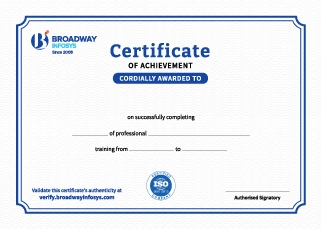
Earn a High Value Industry Certificate
Add this credential to your LinkedIn profile, resume, or CV to stand out to recruiters.
Already earned a certificate?
Verify it here
Frequently Asked Questions
Anyone interested in cybersecurity and security operations can join the training. Basic knowledge of networking, operating systems, and cybersecurity concepts can be helpful.
Yes. Beginners with an interest in cybersecurity can join the training and gradually build the technical knowledge required to work in a Security Operations Center (SOC).
SOC Analyst L1 generally focuses on monitoring security alerts, identifying suspicious activities, and performing initial analysis. L2 involves deeper investigation, incident analysis, threat hunting, and responding to more complex security incidents.
No advanced cybersecurity experience is required. Basic knowledge of networking, operating systems, cybersecurity concepts, and familiarity with Windows or Linux can be helpful. A willingness to learn and an interest in cybersecurity are recommended.
After completing the training, you will be able to monitor security alerts, analyze logs, investigate suspicious activities, identify potential threats, understand SIEM-based security monitoring, and perform basic incident response. The training can also help prepare you for entry-level SOC and cybersecurity roles.
Yes. Practical scenarios can help you understand how security alerts are investigated, analyzed, and handled in a real SOC environment.
Professional cybersecurity experience is not mandatory. However, having a basic understanding of networking, Linux/Windows systems, and cybersecurity fundamentals can make the learning process easier.
Dedicated labs, certified instructors, and placement support. You will receive guidance from trainers throughout the course, including support with practical exercises, tools and software setup, assignments, and cybersecurity concepts. You can also ask questions and get clarification during the training.
Yes. Depending on your requirements, you can discuss suitable schedules with the training team. One-to-one training and group-based learning options may also be available.
The course pricing varies depending on the subject and level. For detailed information on the course price, please contact us directly: +977-9841002000 / +977-1-4111849. Our team will be happy to guide you or send us an email at [email protected].
Our course is in hybrid training mode; you can attend in person or join online, whichever works for you. If you can't make it in person on a given day, you can simply join that class online instead.
Our syllabus outlines are only the headlines of the major modules. To ensure a complete understanding of the course, we offer free counseling. Also, if you have specific modules in mind, you can customize the course. Send your inquiry today!
Lesson 1: SOC Fundamentals
- What is a SOC?
- SOC objectives
- SOC functions
- SOC organizational structure
- L1, L2, L3 responsibilities
- SOC Manager
- Incident Response team
- Threat Intelligence team
- Detection Engineering
- Threat Hunting
- DFIR
- Vulnerability Management
- Security Engineering
- Alert → Triage → Investigation → Escalation → Containment → Eradication → Recovery → Closure
- Incident lifecycle
- Case management
- Evidence handling
- Shift handover
- Escalation procedures
- Incident severity
- SLA management
- MTTD
- MTTA
- MTTR
- False-positive rate
- Alert volume
- Alert-to-incident ratio
- Escalation rate
- Detection coverage
- Analyst workload
Lesson 2: Networking For SOC Analysts
- OSI model, TCP/IP model, Ethernet, MAC addresses, IPv4, IPv6, CIDR, Subnetting, ARP, ICMP, TCP, UDP
Important protocols
- HTTP/HTTPS, DNS, DHCP, SSH, FTP/SFTP, SMTP, IMAP, LDAP, Kerberos, SMB, RDP, SNMP, NTP, TLS
Practical labs
- Wireshark packet analysis
- TCP handshake analysis
- DNS investigation and DNS query/response analysis with Wireshark
- HTTP investigation
- SSH traffic analysis
- TCPdumps
- Suspicious outbound connection investigation
Lesson 3: CyberSecurity Fundamentals
- CIA triad
- Authentication
- Authorization
- Accounting AAA
- Least privilege
- Defense in depth
- Zero Trust
- Attack surface
- Vulnerabilities
- Exploits
- Threats
- Risk
- Indicators of Compromise
- Indicators of Attack
Lesson 4: Windows Security
Windows architecture
- Windows processes, Services, Registry, Users/groups, Security principals, ACLs, UAC, Scheduled Tasks, PowerShell, WMI, Windows Defender
Windows Event Logs
- Security
- System
- Application
- PowerShell
- Sysmon
- Windows Defender
- Task Scheduler
Lesson 5: LINUX Security
Linux fundamentals
- Processes
- Services
- systemd
- Users
- Groups
- Permissions
- Cron
- SSH
- /proc
- /var/log
Lesson 6: SIEM Fundamentals
- What is SIEM?
- Log collection
- Log parsing
- Normalization
- Enrichment
- Correlation
- Detection
- Alerting
- Incident management
Log sources
- Windows
- Linux
- Firewall
- IDS/IPS
- EDR
- Antivirus
- VPN
- Proxy
- DNS
- DHCP
- WAF
- Cloud
- Database
- Application
- Identity provider
Lesson 7: SIEM Practical Training
- Wazuh SIEM
Lesson 8: Log Analysis & Event Investigation
Lesson 9: L1 SOC Alert Triage
Lesson 10: Incident Response Fundamentals
Lesson 11: Cyber Threat Intelligence
Lesson 12: MITRE ATT&CK for SOC Analysts
Lesson 13: EDR/XDR
Lesson 14: Threat Hunting
Lesson 15: Vulnerability Management for SOC
Lesson 16: SOAR & Automation
Lesson 17: Project Modules
- Detect the brute-force attack in windows and linux servers.
- Detect the privilege escalation attacks using SIEM.
- Detect the malware activity within IT infrastructure.
Advanced Cybersecurity Course
CCNA Training

DevOps Training
Upcoming Classes (6)
Why SOC Analyst L1 & L2 Training?
Build real SOC-Ready Skills: Hands-on labs in packet analysis, log investigation, and alert triage used daily by working analysts.
Master the SOC analyst Toolkit: Practical experience with Wireshark, Wazuh SIEM, Sysmon, Windows Event Logs, and MITRE ATT&CK.
Understand Attacks from Both Sides: Learn how phishing, ransomware, lateral movement, and data leakage actually work, so you can detect and stop them.
Handle the Full Incident Lifecycle: From alert triage and investigation to containment, eradication, and recovery, aligned with real SOC workflows and SLAs.
Certified Trainers: Industry expert trainers with practical lab experience, plus 100% career placement assistance.
L1 to L2 Career Readiness: Grow from junior (L1) responsibilities to advanced skills like threat hunting and CTI.
Quick Inquiry
Choose class schedule(s)
-
26 Oct 2026
-
01 Nov 2026
-
17 Nov 2026
-
22 Nov 2026
-
25 Nov 2026
-
29 Nov 2026